
Ride high-speed trains between three Central European capitals on a nine-day route built around walkable hotel hubs.

A multi-city trip through Central Europe is best done by train. This nine-day itinerary connects Prague, Vienna, and Budapest via the high-speed Railjet network, covering the heavy hitters of the former Habsburg empire without requiring a rental car or domestic flights.
The pacing gives you three nights each in Prague and Vienna, plus two in Budapest. It is a structure built for travelers who like a mix of scheduled museum visits and unstructured neighborhood walking. You have enough time to see the major castles and drink a lot of coffee without exhausting yourself.
The trick to a rail journey is staying near the transit nodes. By booking hotels near Wien Hauptbahnhof or the major squares in Prague and Budapest, you eliminate the friction of dragging luggage over cobblestones. You step off the train, drop your bags, and immediately start exploring.


You fly into Prague and out of Budapest. Delta operates a direct overnight flight from JFK to Prague, taking 8 hours and 15 minutes. For the return, Austrian Airlines routes you from Budapest through Vienna back to JFK in just under 11 hours. A taxi or pre-booked transfer gets you from the Prague airport to the city center in about 30 minutes, and the return trip from central Budapest to the airport takes 35 minutes by car.
| Leg | Flight | Route | Times (local) | Duration |
|---|---|---|---|---|
| Outbound | DL 78 | JFK → PRG | 18:45 → 09:00+1 | 8h 15m |
| BUD → VIE | OS 636 | BUD → VIE | 15:10 → 15:55 | 45m |
| Return | OS 35 | VIE → JFK | 16:55 → 20:05 | 9h 10m |
Prague is visually dense and highly walkable. You spend your first full day navigating the massive Prague Castle complex and crossing the Charles Bridge. The trick to the bridge is going early or accepting the crowds mid-afternoon for better lighting. Skip the tourist-trap restaurants near Old Town Square and head across the river to Letná Park for a beer with a view.
The Jewish Quarter requires a combined ticket to see the Old Jewish Cemetery and the Spanish Synagogue, which is worth the cost. In the evenings, get out of the immediate center and head to the Vinohrady neighborhood for dinner at a modern Czech bistro.
Arrival and Old Town Orientation
Drop your bags in Nové Město and watch the Astronomical Clock in the Old Town Square.
Castles and Bridges
Beat the crowds to Prague Castle before walking down to cross the Charles Bridge.

Jewish Heritage and Local Views
Tour the historic Jewish Quarter and drink a Pilsner with a view at Letná Park.

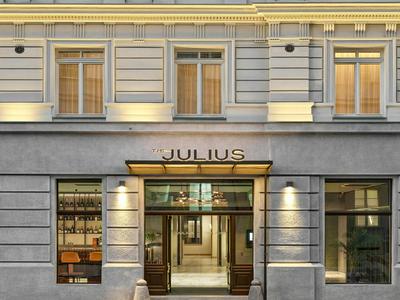
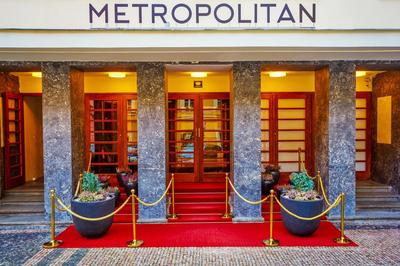
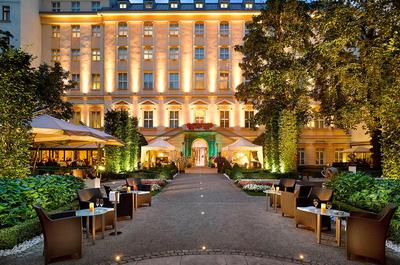
The Julius Prague is the best overall choice here, offering a 5-star experience for $274 near Republic Square. If you want to spend less, Metropolitan Old Town Hotel - Czech Leading Hotels balances quality and location for $213. For a splurge, The Grand Mark Prague - The Leading Hotels of the World provides massive rooms and a private garden for $384.
Vienna feels wider, cleaner, and grander than Prague. The city revolves around the Inner Stadt and the Habsburg palaces. You need to pre-book a morning time slot for the Schönbrunn Palace Grand Tour to avoid standing in line. The Hofburg complex and the Kunsthistorisches Museum will easily fill another day with imperial silver and Bruegel masterpieces.
You will eat a lot of heavy food here. Balance a massive pan-fried cutlet at Figlmüller with lighter Middle Eastern lunch stalls at the Naschmarkt. In the evening, skip the long queue at Café Central and try Café Sperl for a traditional slice of Apfelstrudel and a Melange.
Railjet to the Imperial Capital

Ride the morning train to Vienna and orient yourself around St. Stephen's Cathedral.
Habsburg Grandeur
Tour the massive Schönbrunn Palace and eat lunch at the Naschmarkt.

Art and Palaces
Explore the Hofburg Palace complex and view the masterpieces at the Kunsthistorisches Museum.

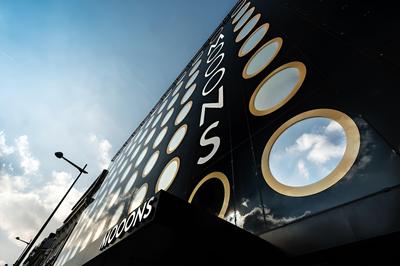
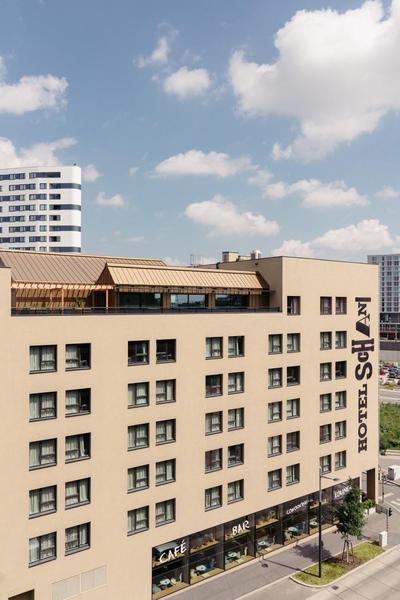
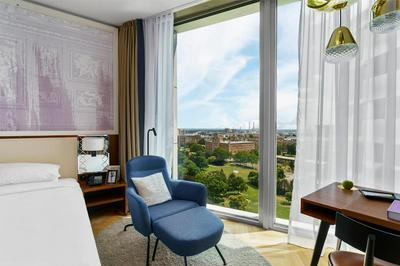
Staying near the main station makes the rail arrival painless. MOOONS is a stylish 4-star option right by the platforms for $166 a night. Hotel Schani Wien Hauptbahnhof is highly affordable at $99, while the Hyatt Regency Vienna offers premium spa amenities nearby for $235.
Budapest is split by the Danube river, with hilly Buda on one side and flat, gridded Pest on the other. Two nights means moving quickly. Focus on the Buda side first, taking the funicular up to Fisherman's Bastion for views of the massive Hungarian Parliament building across the water.
On the Pest side, the Széchenyi Thermal Bath requires a ride on the historic M1 metro line. Bring your own towel and flip-flops to the baths. Spend your final evening in District VII at Szimpla Kert, the original ruin bar, before it fills up late at night.
Danube Arrival
Take the train to Budapest and walk along the Danube to see the Parliament building.
Buda Heights and Thermal Baths
Look over the river from Fisherman's Bastion and soak in the Széchenyi Thermal Bath.

Departure
Pack your bags and take a taxi to the airport for your flight home.
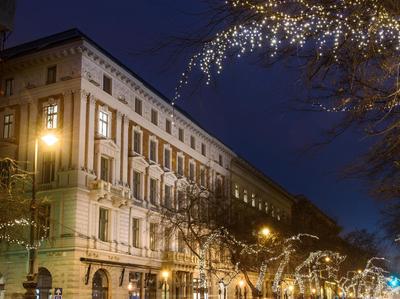
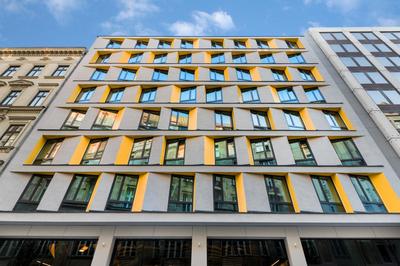
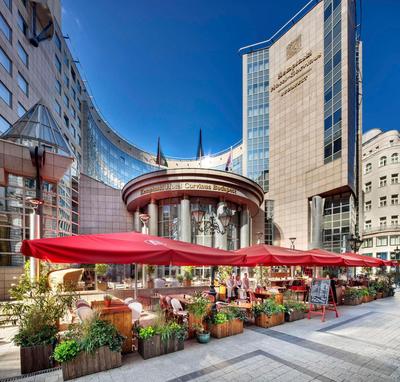
Hotel Moments Budapest by Continental Group is the top pick, putting you right on Andrássy Avenue for $318 a night. D8 Hotel is a solid budget option near the Chain Bridge for $163, and the Kempinski Hotel Corvinus Budapest offers a central luxury stay for $384.
Trains connect the cities. The České dráhy Railjet takes 4 hours from Prague to Vienna. Two days later, the ÖBB Railjet xpress runs from Vienna to Budapest in 2 hours and 40 minutes. Within the cities, public transit is excellent. Use local apps like PID Lítačka in Prague, WienMobil in Vienna, and BudapestGO to buy digital tickets for the metros and trams.
Spring and early fall offer the best balance of mild weather and manageable crowds. Expect daytime highs in the 60s and 70s during May and September.
Austria uses the Euro, while the Czech Republic uses the Koruna and Hungary uses the Forint. Cards are accepted almost everywhere, but having a small amount of local currency is useful for tipping. Hotel costs drop significantly in Vienna if you stay near the train station.
Yes, you should book intercity trains ahead of time. Booking a few weeks out secures your seat reservation and usually gets you a cheaper fare.
No, skip the currency exchange counters. Use your debit card at a local bank ATM upon arrival to get a better exchange rate for small cash purchases.
The major baths are continuously filtered and chlorinated like any public pool. Bring your own sandals to wear while walking between the pools.
First Class is often only slightly more expensive than standard on these routes. It buys you a quieter carriage, more legroom, and the ability to order food directly to your seat.
Book the Schönbrunn Palace and the Hungarian Parliament building weeks in advance. Popular dinner spots like Figlmüller in Vienna also require reservations well before your trip.